


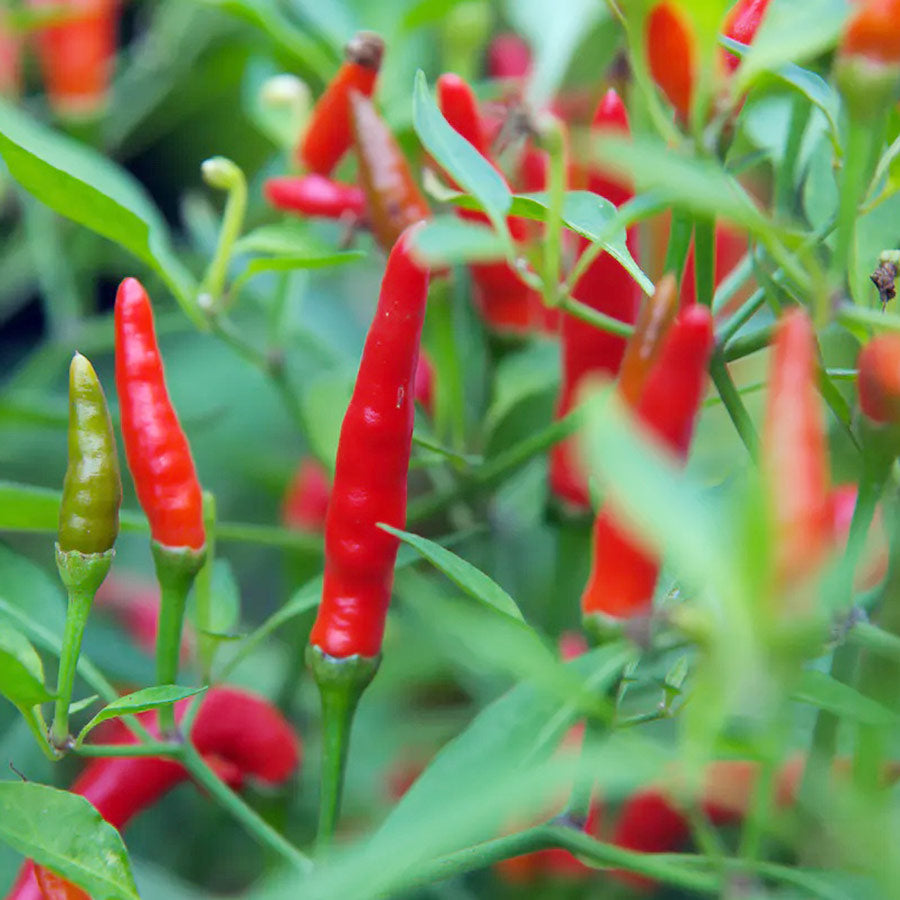

Chilli is not just a spice but an expression of passion and enjoyment. Whether hot, fruity or smoky – there are many ways to use chillies in your kitchen. In this comprehensive guide, we show you how to choose the right chilli for your needs and what matters when buying chilli.
Types of chilli you can buy
Fresh chillies
- Typical fresh varieties in shops: Among fresh chillies, you'll often find jalapeños, habaneros and lesser-known varieties such as Birdseye chilli. Each variety has its own unique flavour and heat level.
- Heat levels from mild to very hot: Pay attention to the heat levels, which can range from 0 (no heat) to over 300,000 Scoville units.
- Differences in shape, colour and aroma: Some chillies are long and thin, while others are round or plump. Colours range from green through red to dark purple.
- Seasonal availability of fresh pods: Many varieties are only available in certain months. Ask your retailer which fresh chillies are in season.
- Recognising freshness: Bright colour, firmness and a smooth surface are signs of fresh pods. Avoid chillies with brown spots or limp stalks.
Whole dried chillies
- Classic dried varieties from different regions: The best known include ancho, guajillo and pasilla chillies, often used in Mexican dishes.
- Use in stews, sauces and rubs: Dried chillies release their flavour when soaked or toasted and give dishes a deep, complex note.
- Soaking and processing whole pods: Before use, they should first be soaked or toasted to intensify the aromas.
- Storage and shelf life: Stored correctly (dry, dark), dried chillies keep for a long time, but lose aroma over time.
- Aroma differences between fresh and dried chillies: While fresh chillies are often crisper and lighter, dried ones have a more concentrated sweetness and deeper aromatics.
Chilli flakes & crushed chilli
- Standard chilli flakes as an all-rounder: These have proven a practical ingredient for countless dishes and offer an attractive way to add heat without having to buy fresh chillies.
- Regional specialities as flakes: Flakes can have different flavour profiles – from fruity to smoky, depending on origin and processing.
- Use in pizza, pasta, marinades and dips: Chilli flakes are extremely versatile and make an excellent seasoning for many dishes.
- Dosage: controlling the heat: Dosage is crucial; always start with a small amount and adjust to taste.
- Advantages of flakes over powder: Chilli flakes often retain their aroma better and are easier to dose.
Chilli powder & grind sizes
- Pure chilli powder vs. spice blends: Check whether it is pure chilli powder or a blend that may contain unwanted additives.
- Light / dark chilli powder blends: Light powders are often milder, while dark ones offer more intense heat and a more robust flavour.
- Grind size: fine, medium, coarse – what suits what? For Asian or Latin American dishes, a finer grind is often preferred, while a coarse grind is ideal for rubs and marinades.
- Typical flavour profiles: Taste the differences between sweet, smoky, earthy and fruity chilli powders.
- Use in rubs, sauces, soups and everyday dishes: Ideal for all kinds of dishes to achieve intense heat.
Chilli spice blends
- Classic chilli blends for stews: They offer a great base for all kinds of dishes and can be customised.
- Hot rubs for grilling and BBQ: These blends are perfect for marinating meat or vegetables and add a special kick.
- Seasoning blends for Mexican, Asian or Mediterranean cuisine: Good spice blends bring flavours from different cultures into your kitchen.
- Blends with herbs, salt, garlic, onion, etc.: Check the ingredients to achieve additional aromas and variations.
- Notes on ingredient lists and additives: Avoid artificial flavour enhancers and look for natural blends.
Chilli oils and chilli crisps
- Chilli oil for drizzling over pizza, pasta, bowls: This oil is an excellent way to refine dishes with flavour and heat.
- Chilli crisp / crunchy chilli oils with pieces: Crunchy seasonings offer not only heat but also texture.
- Use as a topping for rice, noodles and vegetables: Perfect for adding extra flavour to simple dishes.
- Differences in heat and texture: Make sure you find the right balance for your dish.
- Storing chilli oils and shelf life after opening: Keep them in a cool, dark place to preserve freshness.
Chilli sauces, pastes and salsa
- Fermented vs. non-fermented chilli sauces: Fermented sauces develop a more complex aroma, while non-fermented ones taste fresher.
- Thin sauces, thick sauces, paste-like bases: These different consistencies offer flexibility in cooking.
- Salsa varieties: from mild and fruity to very hot: Choose the right salsa for your taste depending on the dish.
- Use as a dip, marinade or cooking ingredient: Sauces and pastes are versatile and can serve as a base for many dishes.
- Understanding heat indicators on labels: Learn how to assess the heat of different sauces so you can choose to suit the dish.
Chilli specialities & special forms
- Smoked chillies and smoky chilli products: These give your dishes a deep, smoky note and are a treat in themselves.
- Stuffed and pickled chillies: They offer an interesting texture and vary in heat and aroma.
- Chilli salt, chilli sugar and other refinements: Use these novel products to refine your food.
- Chocolates and snacks with chilli: These special treats combine sweet and spicy in a delicious way.
- Gift sets with different heat levels: Perfect for chilli lovers and as a special surprise for friends.
Buying chilli at 1001 Organic
At 1001 Organic, you'll find whole Birdseye Chilis, Birdseye Chili Flakes and Chili Meersalz. For milder seasoning and smoky notes, there are also Bio Paprika Mild and Bio Paprika Smoked. Our Birdseye Chilis come directly from smallholder farmers in Zanzibar, without middlemen.
What to look for when buying chilli
- Colour and aroma: Good dried chillies have a strong colour and an intense, fruity and hot aroma.
- Origin: Clear information on origin shows where your chillies come from and who grew them.
- Pure product: Make sure chilli flakes and chilli powder contain no unnecessary additives.
- Packaging: Resealable, light-proof packaging preserves aroma and heat.
Understanding heat levels and choosing correctly
The Scoville scale explained simply
- What the Scoville scale measures: The Scoville scale indicates how hot a chilli is. It measures the capsaicin content.
- Typical values: Sweet peppers are at 0 Scoville units, jalapeños at around 2,500 to 8,000, Birdseye chillies at around 50,000 to 100,000 and habaneros at around 100,000 to 350,000.
- Choosing correctly: If you are not used to heat, start with mild paprika or a small pinch of chilli flakes and increase the amount gradually.


Bestsellers

























Natural & Fair
• Sustainable farming practices
• Local communities
• Direct partnerships
• Effective value creation at the source of the spices
• Farm to Kitchen concept
• Protection of biodiversity
• Fair working conditions

